Netflix Movie Spotlight: Baramulla

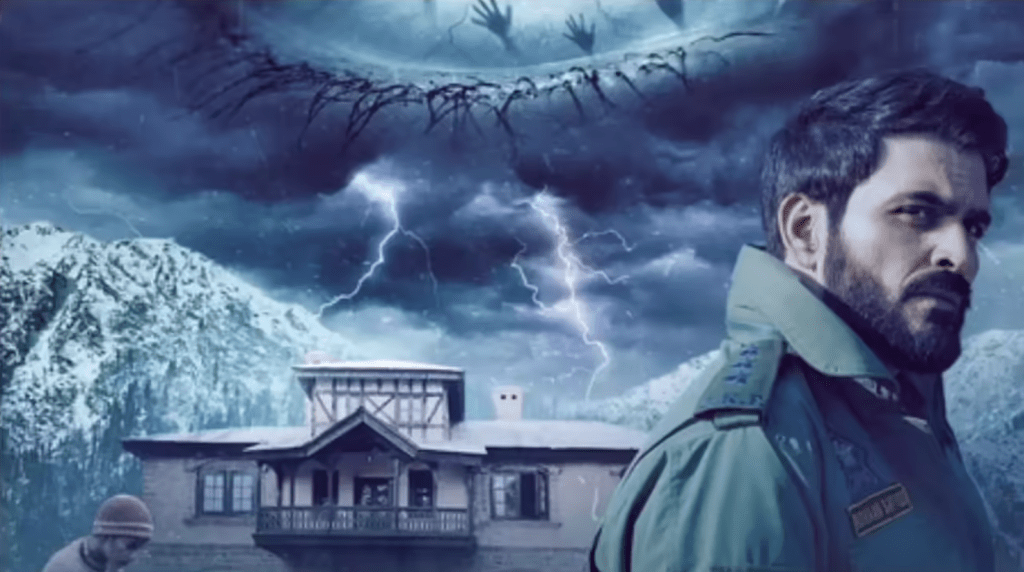
Baramulla Movie Poster

What defines horror? We often think of ghosts, possessed souls, or strange creatures with no clear form. Yet I realized there’s another type of horror that hits harder. The ones that combine these supernatural ideas with the harsh truths of real life. This is a type of blend that creates an impact, which stays with you long after the movie is over. This is where Baramulla is about.

What’s It About?

Baramulla opens with a policeman who moves to Kashmir and stays in an old house filled with secrets. He is there to investigate the disappearance of children in the area. Strange events start to unfold at once. The elder daughter senses a foul, “dog-like” smell in the house, even if there are no dogs. The caretaker carries a plate of food every day to a locked room. What lies behind these mysteries? Why are children vanishing? These questions drive the heart of the story.

Thoughts

I can’t, unfortunately, share everything I felt without giving away the main plot. Since I wanted to share my thoughts in full, I placed them in a separate “Spoilers Ahead” block after this section. You can skip it if you prefer to avoid spoilers.

Baramulla left me with many emotions. I was genuinely amazed by how the team crafted it.

The movie tries something that Indian cinema, to my knowledge, hasn’t attempted before in a horror movie. That is, blending the past and the present into a story that’s rooted in historical events. It reminds you that horror has layers. It’s not only about the unknown, but also the known. The horror of trust turning into betrayal. The horror of being dismissed or gaslit. The horror of violence, both mental and physical. Baramulla captures all of this with sharp clarity.

The performances are strong across the board. Personally, I would say it’s a must-watch.

Baramulla is now streaming on Netflix.

**Spoilers Ahead**

I felt emotional through many scenes. The acting was powerful and honest. The pain never felt exaggerated.

By now, you probably know that the film draws from the suffering Kashmiri Hindus faced in the late ’80s and ’90s. Many cast members are Kashmiri Hindus who had to flee their homes. Manav Kaul is one of them. He left Kashmir when he was in grade 4. He moved on to become a competitive swimmer in his late teenage years and participated in state and national-level championships. He has more than 14 national medals in swimming to his credit.

The end scenes also show Sanjay Suri, which is befitting, since his father was killed by terrorists in Srinagar when Suri was just 19. He moved to Delhi after that and became a known face in the film industry.

The producer and writer, Aditya Dhar, who is also Yami Gautam’s husband, is a Kashmiri Pandit. He has been using his craft to share Kashmir’s story with care and technical prowess.

Some Kashmiri Pandit celebrities, like Kunal Khemu, have chosen not to explore their past, and that is their personal choice. In an interview with Smita Prakash, he said he doesn’t know much about that period, even though his own family lived through it.

I feel it’s important for us to understand our history so we don’t repeat old mistakes. Stories like these should be passed from one generation to the next. My only regret is not asking my grandfather about his experiences—how Kerala felt during the Indian freedom struggle, and what life was like then. Those anecdotes have been lost forever, as he did not pass on the stories to his children as well.

It’s remarkable that so many Kashmiri Hindus who had to flee the valley are using art to express their experiences instead of resorting to violence. Their goal is empathy and understanding, something they were denied for a long time, not provocation. Choosing storytelling over violence is admirable, especially in a world where violence is often justified in the name of resistance.

There are also a few Kashmiri Hindus with left-leaning views who defend problematic groups and take part in “Free Kashmir” sloganeering, similar to how a very small number of non-Zionist Israelis speak in ways that don’t reflect the wider population.

Most Kashmiri Hindus (and some Kashmiri Muslims) have appreciated the movie. However, left-leaning Hindus are also criticizing the movie for “propaganda,” even though the events have been well documented. Films that depict and educate the viewers on crimes against Muslims in India are welcomed, while films showing crimes against Hindus are often dismissed as Islamophobic, nationalist, or propaganda. This imbalance is where many activists struggle. They accept one truth but not the other.

People like me have slowly stepped out of that mindset to face the whole truth.

It may take a while, but I really believe the truth will eventually reach wider acceptance sooner or later. And the stories can’t stop until the pain is finally acknowledged. They need to be told, retold, and carried forward. Only then will they finally find the place they deserve.

Short Film Spotlight: Anuja

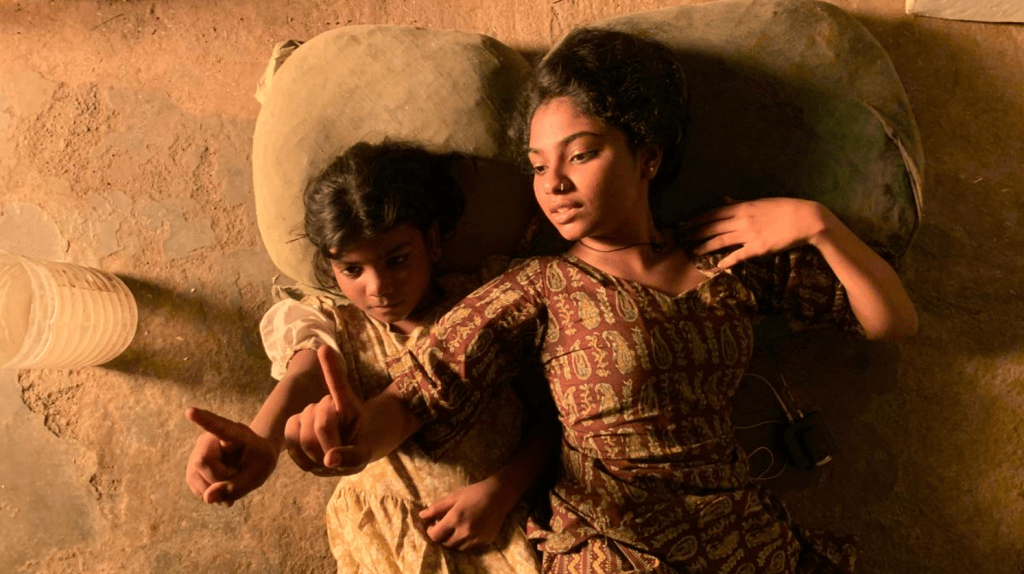
Anuja Short Film Poster

I was craving to watch a slice-of-life drama. Something simple, not too heavy or filled with dread. I honestly thought Anuja would be intense, given how the synopsis sounded. Plus, it’s a Hindi short film that was an Academy Award nominee.

Now, why would I mention the Academy Award nomination like it’s a bad thing? I have my reasons.

To be honest, Oscar nominees have rarely worked for me. In Malayalam, we call such films “award padam.” The kind that feels too abstract or complex for ordinary viewers (like yours truly). There was a time in my life, long ago, when I pretended to enjoy such films just to seem intellectual in front of my then-partner. But I couldn’t keep up the act, and that image fell apart the moment that relationship ended. Now, it seems I’m making up for that lost time. All I want to watch are feel-good films.

So when I saw that Anuja was an Oscar nominee, it didn’t excite me enough to hit play right away. It actually made me hesitate. After all, the Oscars have a reputation for picking Indian films that focus on pain and poverty, what many call “poverty porn,” which does not fully represent what India is today.

Still, I decided to give it a chance.

What’s It About?

A 9-year-old girl works with her sister in a garment factory in India. Despite being naturally bright and curious, she doesn’t attend school because of financial struggles. And, truthfully, she doesn’t want to either. Her elder sister, however, recognizes her potential and dreams of giving her the education she deserves.

Thoughts

The film was a pleasant surprise. I loved it. It was just 22 minutes, but packed with emotions.

It tells the story of child labourers. They are presented not as helpless victims, but as resilient children who find joy even in hardship. The truth is, we often see others through our own lens and may view them as “helpless.” But for them, this is simply life. They know no other kind of life, and they’re doing their best with what they have. That’s what the movie captures so beautifully — life as they see it, not as we do.

It’s a social hierarchy. Someone wealthier might be looking at me with pity, thinking I’m suffering. Yet I’m making the most of what I have, because that’s the life I know. We suffer mostly when we lose something we once had, when we can compare the before and after, and we truly miss the before.

I’ve often felt that those not well-off often make the best of what little they have, which is why they find happiness in the smallest things, like a bag of jalebi, for instance. Anuja captures that spirit beautifully: “The present may not be bright, but we can strive for a better tomorrow.

The film avoids moral preaching or lecturing. It’s simply about two sisters supporting each other in a harsh world.

The most moving part of the film is that Sajda Pathan, who plays Anuja, was once a child labourer in Delhi before being rescued by the Salaam Baalak Trust (SBT). She now lives at the NGO’s Day Care Center, founded in 1988 by filmmaker Mira Nair, who, interestingly, is also the mother of New York’s new Mayor, Zohran Mamdani.

Ananya Shanbhag also delivers an excellent performance as the elder sister, Palak.

I would definitely recommend the short film. Anuja is streaming on Netflix.