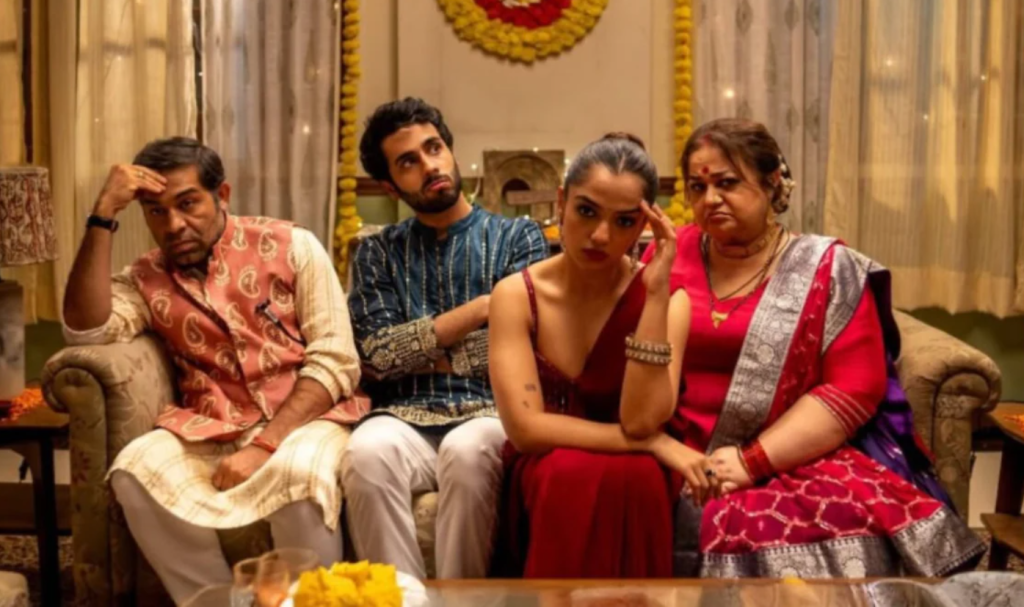
It’s Diwali season. This time of year always puts me in the mood for something cozy and family-friendly to watch. But honestly, we just don’t get those kinds of movies anymore. The ones you can enjoy with everyone at home.
Remember the golden ’90s? We’d all sit together and watch Jo Jeeta Wohi Sikandar, Hum Hain Rahi Pyar Ke, or Dilwale Dulhania Le Jayenge without a single dull moment. Okay, not exactly in my family, as I was the only one truly into Bollywood, while the rest were more drawn to Malayalam movies. But I imagine these were the kind of movies that one would typically watch with their families. Nowadays, to relax, I tune into psychological thrillers because family movies do not feel family-oriented anymore.
That’s why I was keen to watch Greater Kalesh when it dropped on Netflix. It’s perfect for people like me who just want to unwind with something light and heartwarming. At under an hour, it’s an easy, breezy watch before jumping right back into Diwali celebrations.
What’s It About?
A young career woman returns home after a long time to celebrate Diwali with her family. She’s excited for a warm, cheerful reunion, but the moment she steps inside, she’s greeted not by laughter, but by chaos. Her family members are in the middle of a heated argument, and she can’t quite figure out what started it.
Thoughts
Greater Kalesh is short, simple, and surprisingly sweet. It doesn’t have high-stakes drama or a strong, twisting storyline. But that’s exactly what makes it refreshing for me. Sometimes you just want something light, easy, and comforting, and this little film delivers that perfectly. It might not be everyone’s cup of tea, especially if you seek something more cerebral or non-woke, but to me it felt like peeking into the everyday life of a next-door family and watching them sort things out in their own warm, relatable way.
Ahsaas Channa and Supriya Shukla truly shine here. Their mother-daughter bond feels real and layered. The kind that might make you think of your own mom with a smile.
It’s definitely worth a quick watch. Greater Kalesh is now streaming on Netflix.

 The Monkey Dilemma
You must be logged in to post a comment.