I actually wanted to watch Paradha in the theatre, because I thought the cast was interesting. It had my lovely curly-haired favourites: Anupama Parameshwaran and Darshana Rajendran, who are known faces in the South. But then I got caught up with other priorities and missed booking a ticket that weekend. Later, I came across some reviews that made me second-guess whether it was worth watching on the big screen and decided to skip going to the theatre. Recently, when it was released on Amazon Prime, I finally decided to watch it.
The movie made me realize that not every review online is meant for you. Reviews often reflect the reviewer’s personal taste, but we tend to assume we’ll feel the same way. I’ve had similar experiences with other films, too, where the reviews were harsh, yet I ended up enjoying them. I still don’t get the importance of movie reviews, because whether we like a movie or not is subjective. But here I am, giving my own movie reviews from a highly subjective viewpoint. I think we should treat reviews as such: personal opinions of someone who loves watching movies, and not the absolute truth.
What’s It About?
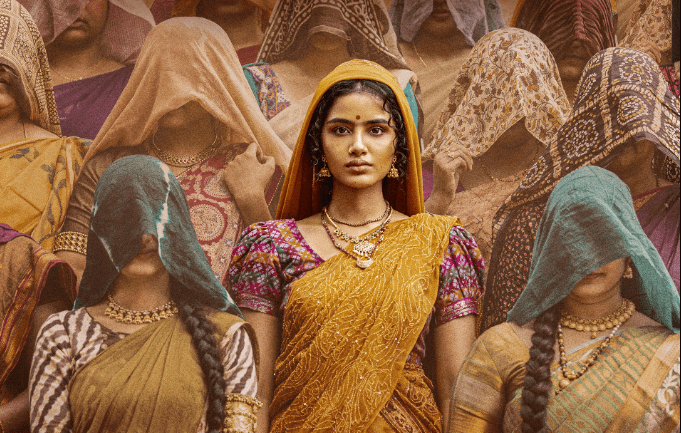
Paradha, true to its name, centers on Subbu (Anupama Parameshwaran), a young Hindu woman from a remote Indian village where the tradition of paradha (dupatta veiling) is strictly practiced. While this custom is largely cultural in many parts of India, the film presents it as a religious mandate. The villagers worship Goddess Jwalamma, who they believe commanded that women remain hidden behind a veil. From puberty onward, every girl is forced to follow this rule, with severe consequences for defiance. Subbu, however, finds herself caught in a controversy that threatens her marriage to the man she loves.
Thoughts
Though the story begins with a devout woman who strictly follows religious practices, Paradha is not just about her. It portrays women from different walks of life, each facing gender discrimination in unique ways.
The first woman is deeply religious, bound by the strict purdah or dupatta system. The second, married outside the village, has left purdah behind but remains traditional in other aspects. The third rejects religious traditions altogether, embraces modern values, and focuses on her career. The fourth is a policewoman who’s happily married, enjoying full freedom, and choosing to follow certain traditions out of personal preference rather than compulsion. The movie keeps the narrative balanced this way.
Paradha is a feminist film centered on women’s empowerment, and it may not appeal to everyone. It highlights how women, even the most progressive, continue to face discrimination, no matter how far they try to escape from it.
I really enjoyed the movie. The climax was chilling, and the performances, especially by Anupama Parameshwaran, Darshana Rajendran, and Sangeetha, were superb. It’s a brave film, because criticizing patriarchy is never easy. Often, women themselves defend restrictive practices by saying, “It’s our choice.” But true choice exists only when opting out doesn’t bring harsh criticism or punishment. Many women follow norms not out of freedom, but because they have no other option. The movie captures this truth powerfully.
Paradha is now streaming on Amazon Prime. I watched it in the original Telugu with English subtitles.
 The Monkey Dilemma
You must be logged in to post a comment.