
Dhurandhar Lingers Long After the Credits Roll

Dhurandhar Movie Poster

I watched Dhurandhar a few days back, and it has stayed with me ever since. It keeps running in my head – the songs, the action sequences, the passion for the country. The nationalist in me is satisfied.

For the first time in a long while, an Indian spy movie moved away from humanizing terrorism. That shift feels bold and necessary. The film forces you to sit with harsh truths instead of offering easy heroes and neat endings. It does not try to make violence look noble or harmless. That honesty is what makes Dhurandhar powerful, and also hard to shake off.

Personally, I felt a quiet mix of angst and sorrow when I saw some people brush the film off as propaganda or political. This view is subjective, but it still made me uneasy. The events shown are not opinions or theories. They happened. Calling a film like Dhurandhar propaganda does a disservice to the people who lost their lives in terrorist attacks. It dismisses real events that happened and real pain that was lived. These truths were not addressed openly for years, often out of fear or sheer convenience. When cinema finally creates space to tell these stories, the instinct should be to listen, not reject. The strong box office response shows that many people are ready to face uncomfortable realities. That response matters. Aditya Dhar deserves credit for choosing honesty over comfort. I have admired his films for consistently daring to tell stories most would rather avoid.

When the screen turned red, I could not hold back my tears. It made me emotional. But I also wondered if anyone watched that moment and felt nothing at all. That thought itself felt disturbing. Not feeling the pain of fellow Indians, or even a flicker of anger, says something deeper. In a country where apathy is already common, it is easy to believe some viewers saw it with blank eyes. For them, everything uncomfortable becomes propaganda, dismissed as an attempt to show Pakistan in a bad light.

Sometimes it feels like a lost cause to expect people to stand firmly with the country, without hesitation or filters. Many of us avoid the truth because it feels uncomfortable. We prefer to hide behind safe words like peace and love. But years of doing that came at a cost. We were taken for granted. Our suffering was questioned. Our stories were dismissed as lies or branded as conspiracy theories.

I think it is time for India to stand up for itself. We need to acknowledge our truth and stop looking away. Facing reality head-on is not hatred or extremism. It is honesty. Only when we accept what went wrong can we learn from it. Growth does not come from denial. It comes from clarity, courage, and accountability.

Now there are people who argue that this much truth does not belong on screen. If that were true, then why do we make social films like Homebound at all? Those films are also hard-hitting and deeply uncomfortable. Cinema has always helped bring difficult issues to the public in a more digestible way. Stopping that only pushes reality back into silence.

The violence in the movie is also being criticised, but real-world events prove how close such scenes are to the truth. The recent lynching of a Hindu man in Bangladesh is a grim reminder that brutality is not exaggerated fiction. Dhurandhar does not sugarcoat this reality, and that honesty is exactly why it matters.

Coming to the performances, while many are praising Akshaye Khanna, for me it was Ranveer Singh who truly stood out. His eyes did most of the talking, and it was brilliant to watch. There was a quiet intensity in his acting that stayed with me. Sara Arjun also impressed me with her performance and screen presence. She brought both grace and emotional weight to her role. The music deserves special mention too. It lingers in your mind and pulls you back into the world of Dhurandhar long after the film ends.

Overall, I would say Dhurandhar is a must-watch. It is not an easy film, but it is an important one. It stays with you long after the credits roll. I most probably would end up watching it again.
Netflix Movie Spotlight: Baramulla

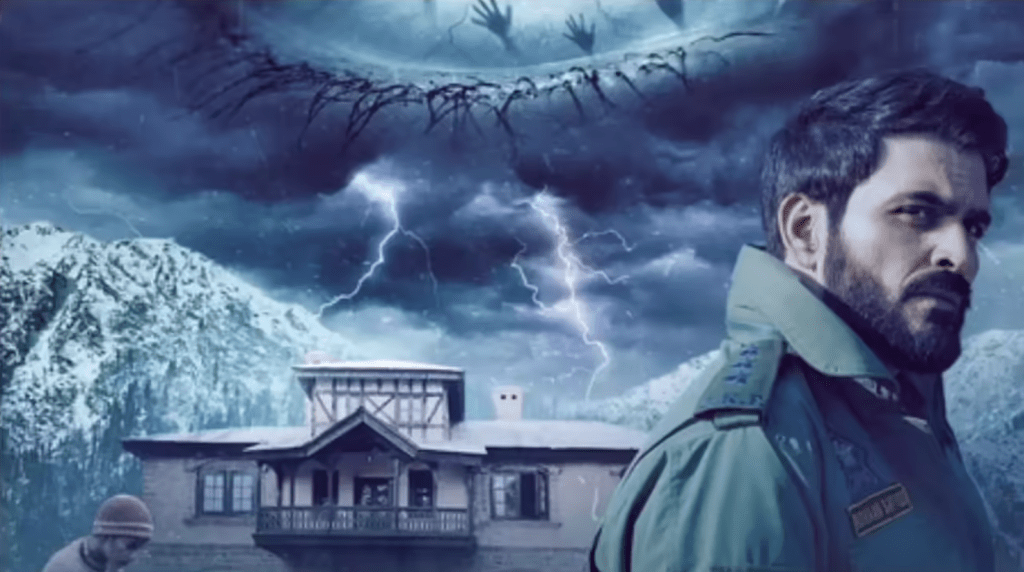
Baramulla Movie Poster

What defines horror? We often think of ghosts, possessed souls, or strange creatures with no clear form. Yet I realized there’s another type of horror that hits harder. The ones that combine these supernatural ideas with the harsh truths of real life. This is a type of blend that creates an impact, which stays with you long after the movie is over. This is where Baramulla is about.

What’s It About?

Baramulla opens with a policeman who moves to Kashmir and stays in an old house filled with secrets. He is there to investigate the disappearance of children in the area. Strange events start to unfold at once. The elder daughter senses a foul, “dog-like” smell in the house, even if there are no dogs. The caretaker carries a plate of food every day to a locked room. What lies behind these mysteries? Why are children vanishing? These questions drive the heart of the story.

Thoughts

I can’t, unfortunately, share everything I felt without giving away the main plot. Since I wanted to share my thoughts in full, I placed them in a separate “Spoilers Ahead” block after this section. You can skip it if you prefer to avoid spoilers.

Baramulla left me with many emotions. I was genuinely amazed by how the team crafted it.

The movie tries something that Indian cinema, to my knowledge, hasn’t attempted before in a horror movie. That is, blending the past and the present into a story that’s rooted in historical events. It reminds you that horror has layers. It’s not only about the unknown, but also the known. The horror of trust turning into betrayal. The horror of being dismissed or gaslit. The horror of violence, both mental and physical. Baramulla captures all of this with sharp clarity.

The performances are strong across the board. Personally, I would say it’s a must-watch.

Baramulla is now streaming on Netflix.

**Spoilers Ahead**

I felt emotional through many scenes. The acting was powerful and honest. The pain never felt exaggerated.

By now, you probably know that the film draws from the suffering Kashmiri Hindus faced in the late ’80s and ’90s. Many cast members are Kashmiri Hindus who had to flee their homes. Manav Kaul is one of them. He left Kashmir when he was in grade 4. He moved on to become a competitive swimmer in his late teenage years and participated in state and national-level championships. He has more than 14 national medals in swimming to his credit.

The end scenes also show Sanjay Suri, which is befitting, since his father was killed by terrorists in Srinagar when Suri was just 19. He moved to Delhi after that and became a known face in the film industry.

The producer and writer, Aditya Dhar, who is also Yami Gautam’s husband, is a Kashmiri Pandit. He has been using his craft to share Kashmir’s story with care and technical prowess.

Some Kashmiri Pandit celebrities, like Kunal Khemu, have chosen not to explore their past, and that is their personal choice. In an interview with Smita Prakash, he said he doesn’t know much about that period, even though his own family lived through it.

I feel it’s important for us to understand our history so we don’t repeat old mistakes. Stories like these should be passed from one generation to the next. My only regret is not asking my grandfather about his experiences—how Kerala felt during the Indian freedom struggle, and what life was like then. Those anecdotes have been lost forever, as he did not pass on the stories to his children as well.

It’s remarkable that so many Kashmiri Hindus who had to flee the valley are using art to express their experiences instead of resorting to violence. Their goal is empathy and understanding, something they were denied for a long time, not provocation. Choosing storytelling over violence is admirable, especially in a world where violence is often justified in the name of resistance.

There are also a few Kashmiri Hindus with left-leaning views who defend problematic groups and take part in “Free Kashmir” sloganeering, similar to how a very small number of non-Zionist Israelis speak in ways that don’t reflect the wider population.

Most Kashmiri Hindus (and some Kashmiri Muslims) have appreciated the movie. However, left-leaning Hindus are also criticizing the movie for “propaganda,” even though the events have been well documented. Films that depict and educate the viewers on crimes against Muslims in India are welcomed, while films showing crimes against Hindus are often dismissed as Islamophobic, nationalist, or propaganda. This imbalance is where many activists struggle. They accept one truth but not the other.

People like me have slowly stepped out of that mindset to face the whole truth.

It may take a while, but I really believe the truth will eventually reach wider acceptance sooner or later. And the stories can’t stop until the pain is finally acknowledged. They need to be told, retold, and carried forward. Only then will they finally find the place they deserve.